

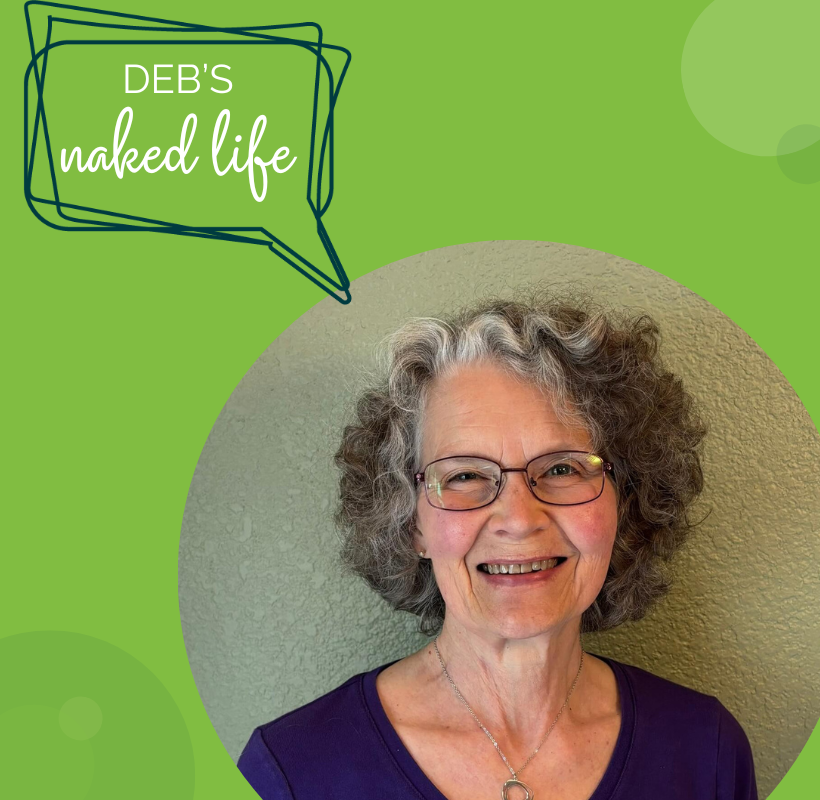
According to the Substance Abuse and Mental Health Services Administration (SAMHSA), roughly 14 to 15 percent of healthcare workers — including doctors, surgeons, and nurses — report struggling with alcohol abuse. Long shifts and life-or-death responsibilities drive burnout, and alcohol becomes the coping mechanism that nobody talks about. What makes it harder to see is that healthcare professionals often know exactly what addiction is supposed to look like, and they don’t match the picture. Deb spent years as a registered nurse and eventually became the director of a hospital addiction recovery program. She was completely blind to her own drinking the entire time.
— Annie Grace
Hear Deb tell her story in her own voice on the This Naked Mind podcast, EP 920.
I Grew Up in a Home Where Alcohol Was a Stranger
My parents barely drank. There might be a bottle of Annie Green Springs in the fridge that would sit for months, occasionally poured in a small glass with spaghetti and then forgotten. I didn’t have my first sip until a senior graduation party, someone had snuck in vodka and OJ, and it was disgusting enough that I stopped at one. I worked my way through college as a nurse, got married young, had a baby while still in school, then worked evening shifts so we could minimize daycare costs while my husband finished his graduate degree. There was no time, no money, and honestly no interest in drinking.
I didn’t really start until my late 20s. Colleagues would head across the street to the bar after hard evening shifts, and I’d occasionally join them on a Friday. That’s where I first discovered that alcohol relaxed me. I’d have one glass of wine so I could drive home. That felt controlled. Reasonable.
One night, after a particularly brutal shift, I found a bottle of wine in the fridge and poured myself a glass, something I had never done alone before. I ended up drinking the whole bottle. There I was with two kids under five to get up with in the morning and I felt horrible. I remember screaming at them and ending up on the floor crying from shame. That scared me enough that I didn’t drink a whole bottle alone again for a long time. But it didn’t make me stop.

Every Night, Without Noticing
After my husband finished school, we moved back to Seattle with a steady income for the first time. We started having drinks at home a few nights a week — a cocktail here, a bottle of wine between us. It slowly became most nights. Then every night. It felt like we had finally arrived at adulthood, doing what everyone around us seemed to be doing. And in the professional circles I moved in, they largely were.
As I climbed into management and hospital administration, the drinking kept pace. For several years, scotch was my drink of choice. When it started noticeably disrupting my sleep, I switched back to wine. My husband drank more than me. Never had blackouts, and could stop when I needed to. I lost over 100 pounds in 18 months by cutting back sharply on alcohol. I completed a two-year MBA while working full time and barely drank during either. As soon as each goal was met, I was back to every night within weeks.
I knew it wasn’t ideal for my health, particularly my sleep. Research has confirmed what I sensed but minimized: even moderate nightly drinking significantly degrades sleep quality. But I compared myself to the people around me and concluded I was fine.
I was also the director of our hospital’s inpatient detox and outpatient addiction recovery program. I interacted with the providers, the clinical staff, the patients in treatment. The diagnostic criteria was clear to me. I knew the profile. And when I held myself up against it, I didn’t match. No DUI. No missed work. Nothing visibly lost. I was a high-functioning professional, and the idea that change requires a rock bottom was embedded in everything I understood about addiction. So I waited for one that never came, blind to my own drinking in plain sight.
The Night One Book Changed the Frame
In August 2018, I had eye surgery that resulted in a small stroke in my eye, causing some vision loss. That was the first time I genuinely reconsidered my drinking, not to quit, but to understand how to moderate better.
A few months later, a fellow Weight Watchers member mentioned Annie Grace’s book This Naked Mind: Control Alcohol in a community post. The words “Control Alcohol” caught me immediately. I bought it and read the whole thing in one night in December 2018, a few glasses of wine on the go, completely ignoring Annie’s instruction to take it slowly. I couldn’t put it down. At parts, I cried. Page after page felt like reading my own story back to myself.
I finished it and thought: I’m done. I can choose not to drink and it will be okay.
The next morning, December 18, 2018, I quit. That night I had a glass of wine anyway — the rebellion showed up right on schedule. The morning after that, I woke up feeling awful and decided I never wanted to feel that way again. I haven’t.
The years I’d spent working on my weight and my inner life had built something I hadn’t named yet: self-compassion, a gratitude practice, the habit of approaching myself with curiosity rather than judgment. When This Naked Mind’s framework met those foundations, it didn’t have to fight me. It confirmed something I had already started to know.
Start Reading
Are you ready for freedom from alcohol? Get started just like Deb did – by reading This Naked Mind. Download the first chapter for free right now!
What Came After
In 2018 there were almost no resources yet. The app didn’t exist. Most of the programs hadn’t been built. It was lonely — I genuinely didn’t know a single person who had chosen not to drink. But Annie had recorded her 2018 live event in Denver, and I bought access and watched two full days of content. Sitting in that virtual room full of people who had made the same choice was something I hadn’t known I needed.
Hard things followed. Being alcohol-free made things in my marriage impossible to keep looking past. I got counseling. I did the work. My life is more honest now than it has ever been.
I’m 68. I became a certified This Naked Mind coach in 2024, after talking myself out of it for four years. To my own disbelief, I own an LLC. Something I never once imagined when I retired in 2014. I work with people who remind me of who I used to be. High-functioning, capable, professionally accomplished, and completely blind to their own drinking. Many of them work in healthcare or other service professions. The profile they’ve been told to look for was never the full picture, and they don’t have to match it to deserve a different kind of life.
If I could go back and say one thing to the version of me who was pouring wine every night and calling it fine, it would be this: you were always enough without the alcohol. You fell into it because you didn’t know how to handle some of life’s challenges, so you learned from those around you — and it turns out they didn’t really know either.
Reach Deb at Full Heart Coaching or find her in the This Naked Mind coach directory.

Share Your Story
Did you change your relationship with alcohol through our books, the app, the podcasts, or another program at This Naked Mind? Please share your story (as yourself or anonymously) and inspire others on their journey!
FAQ
Q: Can a nurse or healthcare professional have a drinking problem without realizing it?
A: Yes, and it’s more common than most people know. According to SAMHSA, roughly 14 to 15 percent of healthcare workers report struggling with alcohol abuse. Long shifts, burnout, and constant exposure to crisis create conditions where nightly drinking normalizes quickly — and clinical knowledge of addiction can actually make it harder to see your own situation clearly, because you know what the profile is supposed to look like and you don’t match it.
Q: Do you need to hit rock bottom before you can stop drinking?
A: No. Deb directed a hospital addiction recovery program for years and never lost a job, a relationship, or her health visibly enough to feel she qualified for change. What shifted was a quiet, honest recognition that alcohol was costing her something she couldn’t fully name yet. Annie Grace has written about this — waiting for rock bottom keeps millions of people stuck who could be free right now.
Q: What does it mean to be blind to your own drinking?
A: It means the habits are there but the perception of them as a problem isn’t. For high-functioning drinkers especially, comparison is the main mechanism — you measure yourself against people who drink more, against clinical definitions that don’t fit, against a life that still looks intact from the outside. Deb ran an addiction recovery program and never once considered that she might benefit from it. That’s not denial in the dramatic sense; it’s just how the normalization works.
Q: What is This Naked Mind and how is it different from AA or traditional recovery?
A: This Naked Mind was founded by Annie Grace and is built on Affective Liminal Psychology (ALP) — the idea that lasting change starts with shifting unconscious beliefs about alcohol, not with willpower, labels, or group confession. There’s no requirement to identify as an alcoholic, no rock bottom prerequisite, and no lifetime of abstinence framed as deprivation. Deb read the book in one night in 2018 and has been alcohol-free since the following morning.
Q: Is it possible to stop drinking after decades of nightly drinking?
A: Deb stopped after nearly thirty years of drinking every night, at 62, without a treatment program, without a dramatic crisis, and without her husband’s support. What made it possible was a framework that didn’t require her to become someone she wasn’t. The life skills and inner work she had already done gave her more traction than she realized. She’s been alcohol-free for over six years and coaches others navigating the same terrain.
About the Founder
Annie Grace is the author of This Naked Mind: Control Alcohol, Find Freedom, Discover Happiness & Change Your Life and the founder of This Naked Mind — the science-based approach to changing your relationship with alcohol without deprivation or willpower. After spending years in a high-powered corporate career while her drinking quietly escalated, Annie used research, curiosity, and self-compassion to find her own freedom from alcohol. Today, she’s helped hundreds of thousands of people around the world do the same.
Learn more about Annie →
Copyright © 2026 This Naked Mind. This material is original content and is protected by international copyright laws. Unauthorized reproduction or distribution of this content will be met with legal action.