
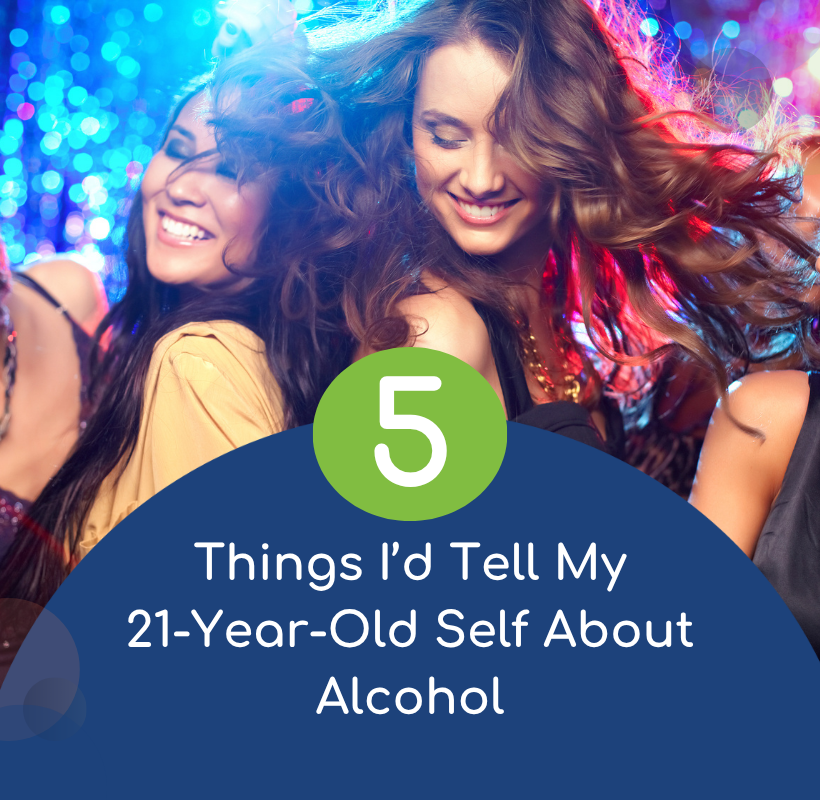
If I could time-travel, I’d hand my younger self a sticky note that says: what I wish I knew about alcohol at 21 is that freedom beats rules. Freedom looks like better sleep, better sex, lower stress, and a body/brain that feel like home again. Below are five truths I learned the long way—so you don’t have to—plus holiday-ready tools from This Naked Mind.
“We don’t have to ask, ‘Do I have a problem?’ as much as, ‘How good could life get without alcohol?’” — Annie Grace
1) You don’t need alcohol to have fun
Your best memories come from people, presence, and play—not ethanol. Alcohol actually dampens sensation and emotion, which is why “fun” often fades as the night goes on. If you want easy proof, do a curiosity reset with The Alcohol Experiment and collect your own data on energy, mood, and joy.
“What I wish I knew about alcohol at 21” would’ve changed a lot of my “default” choices.
2) Be conscious in your relationship with alcohol (sleep, skin, long-term health)
“Everyday” drinking can look harmless at 21, but the tab shows up later—especially in sleep quality. Alcohol reduces REM and fragments sleep (you may pass out faster, but the brain recovers worse). From a long-term lens, alcohol is a Group 1 carcinogen. Even low levels raise risk for several cancers. See the National Cancer Institute’s fact sheet and WHO/IARC guidance (WHO/IARC 2023; HHS 2024 brief).
Study spotlight: Experimental and review data show alcohol can suppress REM in the first part of the night and fragment sleep architecture, undermining next-day mood and performance (Gardiner 2024; Roehrs 2001).
3) Sex is better without booze (more sensation, arousal, connection)
It’s common to assume alcohol makes sex amazing. Physiologically, intoxication turns down sensory processing (more GABA-mediated sedation; slower signaling), and large-scale reviews link alcohol to higher rates of sexual dysfunction.
Translation: you register less pleasure and performance can drop as BAC rises. Reviews summarize increased dysfunction across domains for men and women (Salari 2023; Pendharkar 2016; see also Yadav 2024).
Try this: Create one fully alcohol-free intimacy window this week and note sensory differences after.

4) Alcohol is not a stress reliever (the “I need a drink” trap)
“I need a drink” gives short-term relief that boomerangs: as alcohol wears off, stress hormones rebound and tolerance creeps up. Dysregulation of the HPA axis (your stress system) is well-documented in problematic use and early abstinence (Stephens 2012; Blaine 2016; Dunne 2023).
Swap the script: 90-second exhale-heavy breathing, a 10-minute walk, text a friend exactly what’s hard, or micro-plan the next step. If stress feels unmanageable, the 988 Suicide & Crisis Lifeline is free and confidential.
5) Drinking to numb pain is the most dangerous pattern
Alcohol depresses the central nervous system—numbing now while expanding tomorrow’s problems. The cycle becomes: feel pain → drink → avoid → accumulate more pain. A better plan is to feel and support: journal one page, cry, call someone safe, book counseling, or try a grounding practice.
Quick wins (do these this week)
- AF Social Reps: Do two normally-with-alcohol plans alcohol-free. Log fun, connection, and energy.
- Sleep Upgrade: No drinks within 3 hours of bedtime for 7 days; track morning energy (1–10). Tie improvements to REM recovery.
- Stress Swap: Replace the first “I need a drink” cue with breathwork or a brisk walk; message one person for accountability.
Holiday help (if parties and pressure are your triggers)
Join the Holiday Reset Challenge
Want a simple, supported way to feel calm, clear, and in control before January 1? Join our Holiday Reset Challenge—a short, shame-free sprint with daily guidance, AF party strategies, and community support.
The Bravest Question You Can Ask Yourself
If there’s one thing I wish I could whisper to my 21-year-old self—and to you—it’s this: you don’t have to prove anything to alcohol. You don’t owe it your weekends, your sleep, your laughter, your intimacy, or your peace. Real freedom starts with a gentle, honest question: What if life could feel easier without alcohol being the main character? Not forever. Not a dramatic declaration. Just curiosity, today. When you ask that kind of question, you step out of the tug-of-war and into your own power.
You notice the moments you’re already having fun without a drink. You feel your body exhale after a night of real sleep. And you catch yourself present—in a conversation, a kiss, a belly laugh—and realize you didn’t miss anything by staying clear. This isn’t about ultimatums or living a perfect life. It’s about awareness. It’s about swapping “I need a drink” for “What do I actually need right now?”—rest, connection, movement, a good cry, a friend who reminds you who you are. And if you slip, you’re not broken; you’re human. Curiosity works tomorrow, too.
So try a small experiment. Give one situation you usually pair with alcohol a different script and see what changes. Keep notes like a scientist of your own life. Celebrate the data that tells you you’re already capable. If “what I wish I knew about alcohol at 21” resonates, let it become “what I know now”—that your best memories, your clearest mornings, and your truest self are waiting on the other side of a very brave question.
Annie Grace is the author of This Naked Mind: Control Alcohol, Find Freedom, Discover Happiness and The Alcohol Experiment. She hosts the This Naked Mind Podcast and has helped hundreds of thousands of people change their relationship with alcohol through science-based education and compassionate support.
Copyright © 2025 This Naked Mind. This material is original content and is protected by international copyright laws. Unauthorized reproduction or distribution of this content will be met with legal action.