
What changes after a year of not drinking? If you’re like me or Sheela, you might have spent years telling yourself you’ll never know because that amount of time without alcohol just seemed out of reach. The stop/start drinking loop isn’t a new phenomenon: research shows that a lapse after a period of abstinence often pulls people back to drinking as much as before, sometimes more (PMC, 2013). Sheela shares what it took to find lasting freedom.
— Annie Grace
Trigger warning: This post includes a mention of a cancer diagnosis.
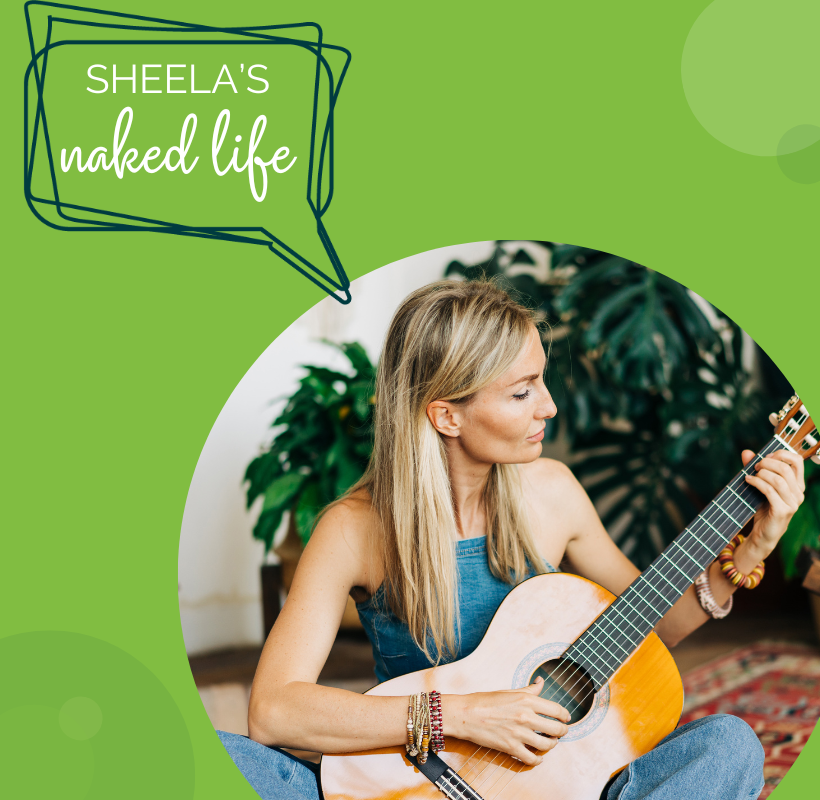
Drinking and the music business seem to go hand in hand. That was the reality of life for Sheela as she navigated the Australian music industry for years. Juggling work and gigs meant that weekends were for release, dry Julys were for proving she could take a break, and every reset brought her right back to start like a game of Chutes and Ladders. Sheela takes us through the ups and downs of her Naked Life story and shares what happens after a year of not drinking.
You can listen to Sheela’s full conversation on the podcast here.
Growing Up With Drinking as Part of Being an Adult
I was a heavy drinker for decades, and it crept up on me over the years. Drinking was very normalised in Australian culture, and where I worked, because I was a musician working in bars for a long time. Repetitive use over a long period of time became a habit and a way of life. It wasn’t really seen as unusual, and it wasn’t really noticed that there was anything wrong with it. I fit in.
Growing up, alcohol was a rite of passage into adulthood. People drank at parties, people drank socially, you’d see it on TV, in all the advertising, and so many social activities were organised around alcohol.
There’s also a celebration when you leave school here, when you graduate high school at 17. It’s called Schoolies Week, and all the kids who’ve just graduated go to the Gold Coast or somewhere similar and drink to dangerous excess. It’s another rite of passage, leaving school. I went to Schoolies, and I remember the stories of people drinking so much and laughing about blacking out, falling asleep in places they shouldn’t, being in dangerous situations, all as part of celebrating. It’s an example of how prevalent and accepted it is in the culture.
I tried it as a teenager, because it was seen as this adult thing, this naughty thing you do. I was probably 14 or 15. I snuck some and didn’t feel particularly great about it, looking back. I remember we somehow talked an adult into buying us a bottle of Blackberry Nip once, when we were staying at the beach. We’d share it at a bonfire. It was the ultimate naughty thing, and we wouldn’t tell our parents.

How I Tried Controlling My Drinking
I used to be a wine drinker, and I was particular about the wine I drank. I saw myself as an appreciator of fine wine. There was a numbing effect to it, an ease. At the end of the day I’d crave wine o’clock, and after everything was finished, it created a nice plateau for a while. Of course, I’d wake up at three o’clock in the morning with anxiety, cortisol high, and all the feelings I was trying to avoid would come to the surface.
I would try to moderate, but that felt hard, as my body would want its quota, which was usually over a bottle of wine. So I would aim to drink only on weekends. That worked, unless I’d had a bad day during the week and wanted a drink. I would really look forward to binge drinking on weekends.
I was able to sometimes do dry Julys, or have a fortnight alcohol free. At first, I joined one of those 30 day resets before joining The Path. I was successful, and I continued for 75 days. Then I thought, I don’t feel free. I missed it. There’s a bar just across the road from where I live, and I used to walk past it and feel jealous, like I was missing out. After the 75 days alcohol free, I went back to drinking for a while, because I didn’t feel free.
A friend of mine hadn’t had anything to drink for five years. She’d stopped just from reading This Naked Mind, and she recommended it to me. She told me it takes about two months for your body to rebalance itself, to come back to homeostasis, and she was right. That was motivating, because I told myself I was going to get to two months. I wanted to feel what she was describing, and it felt great. After reading the book myself, I looked into what courses were available.
Finding The Path and Doing My Own Alcohol Experiment
I attended The Path for one year. You do self analysis and self reflection every day, and you have a whole year to do it. It takes time and self reflection to become self aware.
In the course they talk about focusing on the gains. That was helpful, because some days I’d think about missing the old days, but then I’d look at the gains: waking up healthy, no hangover, my skin glowing, feeling more relaxed. I had to keep going. It’s not just a mental concept, you feel it in your physical health.
I also did my own alcohol experiment. I sat alone in my flat, drank, and analysed how it was really making me feel. I removed all distractions, no parties, no friends, nothing coupled with anything else. It was just me and alcohol, and I assessed what it was doing for me. I didn’t video myself, but I took photos and journaled. The most profound part was noticing how I woke up. I fell asleep after I drank, then woke up a couple of hours later with that horrible high cortisol anxiety feeling again. I had something to compare it to, because I’d had 75 days alcohol free, and I was waking up feeling great during that time. I missed being alcohol free more than I missed drinking, if that makes sense.
It wasn’t like flicking a switch. There were a lot of aspects to persevere with. It took a couple of years for me to really let go. I made some good friends along the way too, people I still stay in touch with, mostly online, and I found the whole process fun. It was like going to uni, or doing a course. You meet people, you chat, you learn the same material, and you understand each other. The coaches are lovely too. There’s a lot of laughter and lightness. It’s not constant shame, it’s about letting go of shame instead.
Shame only exists in secret. If you bring it out and shine light on it, it’s gone. Being honest dissolves it. The difficult part is having the courage to bring it into the open.
What Changes After a Year of Not Drinking
Here’s what changes after a year of not drinking:
I’m now in the second half of my second year alcohol free. My health is great, and I don’t have any conditions to speak of. Four years ago I had stage 3a bowel cancer, which motivated my desire to stop drinking in the first place, and I’m in complete remission now.
The most profound physical change for me has been the return of good quality sleep. I love my sleep now. Curling up in bed and waking up slowly, without anxiety or regret, then gearing into the day, it’s wonderful. I missed that for all the years I was drinking. I deprived myself of it. I tell people now that nine o’clock is my bedtime, and I probably can’t go out that late. It’s not about avoiding social situations, I genuinely relish going to bed.
I used to be scared of liver function tests. I’d think, I have to have a blood test, I’m not going to drink for three or four days beforehand. If I drank the night before, the test would spike, because your liver is trying to process the alcohol from the night before. Now I enjoy telling my GP, when they ask how much I drink, that I don’t drink at all. They always congratulate you.
People in my life still think I’m doing this with willpower. My family says they admire my willpower. I keep telling them it’s not willpower. I don’t miss it. I missed it at first, but I don’t anymore. I don’t wake up every day thinking I’m going to be strong today. It was like that at first, but not anymore.
Looking Back
I’m present and relaxed with all that life is. I feel all my feelings, I accept them far more easily, and I’m far more relaxed in general. I think alcohol was a downer, and it didn’t do me any favours. Being a drinker was like inviting dark clouds into my life. I feel more connected to my spiritual sunshine these days. Loved ones comment on my relaxed state of being, and my glowing skin.
If I could go back and say something to a version of myself who needed it, it would be this: it is only hard in the beginning. Hang in there, girl. Life really is much better on the other side of alcohol. It gets a lot easier once you build up some momentum with it.

Share Your Story
Did you change your relationship with alcohol through our books, the app, the podcasts, or another program at This Naked Mind? Please share your story (as yourself or anonymously) and inspire others on their journey!
FAQ
Q: What happens after a year of not drinking?
A: For Sheela, the biggest change was her sleep. She describes waking up slowly and gently instead of hungover, and calls nine o’clock her bedtime now, by choice rather than obligation. She’s also in complete remission from a stage 3a bowel cancer diagnosis that helped motivate her decision to stop drinking, and she’s now in the second half of her second year alcohol free.
Q: What is The Path from This Naked Mind?
A: The Path is a year-long program built around daily self analysis and self reflection, guided by course material and coaches. Sheela describes it as effective for helping her break free from alcohol, but also genuinely fun: she compares it to taking a course alongside people you learn with and eventually call friends.
Q: Why did Sheela go back to drinking after 75 days alcohol free?
A: She’d completed a 30 day reset and extended it to 75 days, but found she didn’t feel free. She describes walking past a bar near her home and feeling jealous, like she was missing out. That belief, that not drinking meant deprivation, was exactly what she worked through afterward with The Path.
Q: Does staying alcohol free take willpower?
A: Sheela’s own family assumed so, telling her they admired her willpower. She disagrees. She says she doesn’t wake up each day telling herself to be strong, and she doesn’t miss drinking the way she did early on, which is different from fighting an urge through willpower alone.
About the Founder

Annie Grace is the bestselling author of This Naked Mind, The Alcohol Experiment, and Live Naked AF, and the founder of This Naked Mind. At 26, she became the youngest vice president at a multinational corporation; by 35, she was overseeing marketing across 28 countries — and drinking close to two bottles of wine a night. Rather than accept a life of willpower and white-knuckling, she developed Affective Liminal Psychology — a framework rooted in neuroscience and the psychology of desire — and found a way out that required no labels, no rock bottom, and no deprivation. Today, her work has been featured on Good Morning America and Nightline, and has helped millions of people worldwide discover what she calls alcohol freedom.
Copyright © 2026 This Naked Mind. This material is original content and is protected by international copyright laws. Unauthorized reproduction or distribution of this content will be met with legal action.