

Trigger warning: This post includes references to grief, the loss of a spouse, prolonged caregiving, and a personal health crisis.
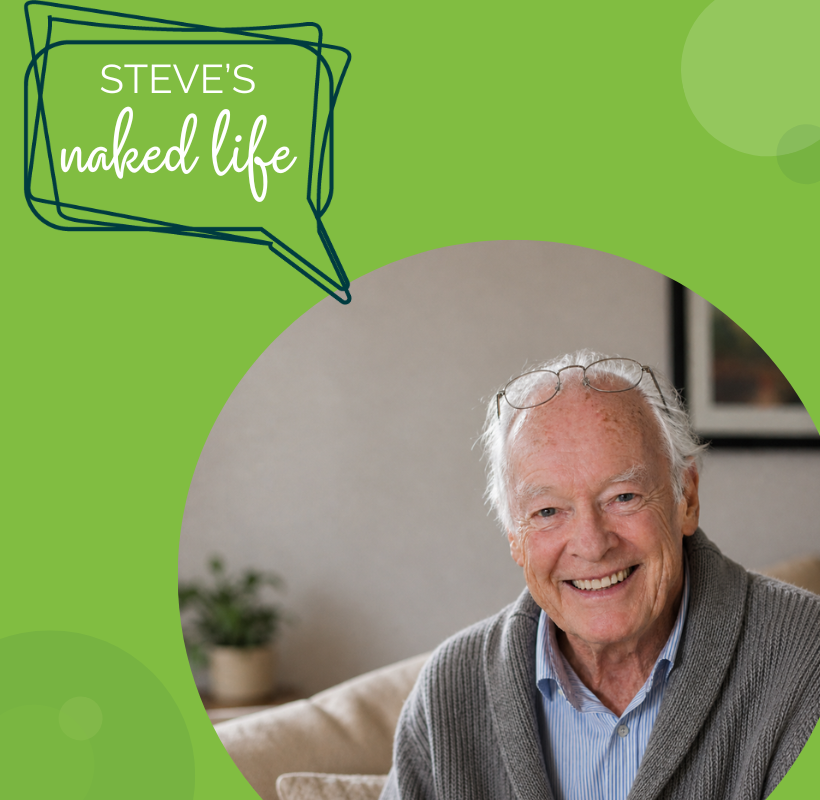
Drinking after losing your spouse is something we don’t talk about nearly enough — and the research tells us exactly why that silence is dangerous. A 2025 national study found that about one in three bereaved adults develop problematic drinking after a loss, with the highest risk in that brutal first year. Grief can tear us apart and upset the balance, structure, and routine that kept everything in check. Alcohol moves into that space because that’s exactly what it’s wired to do. It’s fast, it’s reliable, and it doesn’t ask anything of you. Steve spent seven years caregiving for his wife of 28 years — painting in his studio after she fell asleep, drink in hand, getting through — and when she died, the quiet she left behind nearly took him with her. His story is one so many have lived through or are living through right now.
— Annie Grace
Broken Wide Open
What do you do with the quiet that comes after drinking after losing your spouse, when the years of caregiving are over, the house is still, and the only habit left is the one that was always there? That question is at the center of Steve’s story. For 28 years, Steve and his wife built something genuinely happy — something he hadn’t believed was possible after a painful first marriage. She got cancer. Seven years of treatment and remission and then a cascade of health crises that left Steve as her full-time caregiver for the final stretch of her life. When she died, he was 74, alone, and the alcohol that had been part of his life since he was 16 was the only constant standing. Then, in a single evening with Annie Grace through The Path, the logjam broke.

Twenty-Eight Years and the Habit That Was Always There
My second wife was everything.
After a painful first marriage, years of trying to make sense of who I was when things fell apart, and a stretch of life I’m not proud of, she was the one who made sense. We met line dancing — you can’t drink on the dance floor if you actually want to learn the steps. We talked, we built something, and for 28 years it was genuinely happy.
Alcohol was in the background the whole time. It had been since I was 16, when I found a six-pack on a sand dune on Cape Cod with some guys I desperately wanted to like me, and felt, for the first time in my life, like I belonged somewhere. By the time I met her, drinking was just part of how I operated. She knew the full history. She loved me anyway.
Then she got cancer.
Seven years of treatment, then remission. Then a fall. Then a cascade of bone and joint failure that took away her mobility and, eventually, her independence. For the last three years of her life, I was her caregiver around the clock. We were in COVID isolation anyway — her immune system couldn’t take the risk — so it was just the two of us, inside, together. Those years were hard and also, somehow, the most tender we had. We didn’t care about any of the things we thought we cared about before. We were just together.
I had a studio out back. After I’d get her settled for the night, I’d go out there and paint and drink. That was my hour. That was how I got through.
She died about a year before I’m writing this.
When the Quiet Became the Problem
What nobody tells you about drinking after losing your spouse is that the bottle is still there. You’ve lost the companionship, the shared routine, the reason to be present at a certain hour — and the habit that lived underneath all of it is right where you left it. The quiet was enormous. The reaching was immediate.
If you’re navigating grief and alcohol at the same time, Annie Grace’s podcast episode on dealing with grief without alcohol speaks directly to this intersection, including the neuroscience of why loss and drinking become so tightly linked. It’s worth a listen.
For me, drinking after losing my spouse lasted through an increasingly dangerous stretch that came to a head in April of 2024. I had a health crisis that brought me close enough to the edge that I couldn’t look away anymore. I had been functional for 60 years — always worked, always showed up, always kept it together on the outside — and suddenly I was face to face with the fact that functional and okay are not the same thing. I was very far from okay.
I joined The Path. In July, I attended a virtual event with Annie Grace. And what happened next is hard to describe without it sounding like an exaggeration, so I’ll just say: the logjam broke. I finally understood the why. Not just the why of drinking after losing my wife — but the original why. The 16-year-old on the beach who felt belonging for the first time and spent the next six decades chasing it. That understanding changed everything. I have been alcohol-free since July 12, 2025. I turned 76 on Christmas Day. Over 258 days in as I write this.
If you’ve spent years trying to control your drinking through willpower and wondering why it never sticks, The Path from This Naked Mind offers something different: the science behind why you drink, and what becomes possible once you actually understand it.
What Changes When You Finally Stop
There are practical things I didn’t expect. I get roughly a third of my day back. I’m up at dawn now, clear, with hours ahead of me instead of sleeping off the night before. I’m painting more. I have time in a way that genuinely surprised me.
But the larger change is harder to name. When I was drinking, I would resolve something — work through a feeling, come to a conclusion — and then not remember the resolution by morning. Groundhog Day, over and over. The same grief, the same question, the same bottle. Now when I work through something, it stays worked through. That matters enormously in grief, because grief actually needs you present. You cannot process what you cannot feel.
I’ve also had to look honestly at what alcohol was doing underneath the surface — not just after my wife died, but going back to the beginning. The relief it offered was always borrowed. It never resolved anything. It just made the next day’s version of the same pain a little harder to face.
The holidays are loaded for me. I’ve been diagnosed with seasonal depression and PTSD connected to Christmas, and for more than three decades alcohol was how I braced myself for what I knew was coming. What I understand now is that it made me unreachable when it mattered. My adult children carry wounds from my first marriage — real wounds, from a time I’m not proud of. They don’t yet trust that this time is different. My coach Soraya said something in a session that stopped me: instead of waiting for them to love and respect you the way you want, what if you started by doing that for yourself? I’ve spent 75 years leading with everyone else’s needs. I don’t know how to put myself first yet. But I’m learning.
Listen In
Listen to Steve’s full coaching session: How To Stop Drinking When You Feel Overwhelmed | EP 895
Something else has shifted too. I was recently at a gathering where the people around me were deep into it — slurred words, the same conversation on repeat, the whole performance of it. I didn’t want a drink. I felt something closer to sadness. Sadness that they were still hijacked. I stayed home the following night because I didn’t want to be around it. For someone who spent 60 years as the one drinking, that’s a genuinely strange and quiet kind of freedom.

If you’re wondering whether it’s ever too late, Catherine found alcohol freedom at 66 and will tell you it isn’t. And if drinking after losing your spouse is something you’re living right now, or something you’re afraid of, or something you’ve been doing longer than you can account for — The Path is where I’d point you. Not because it’s a quick answer. Because it gave me the only thing that ever actually worked: the real reason why.
Looking Back
I had 28 extraordinary years with a woman who deserved the best of me. I showed up for as much of it as I could. I’m not going back to the version of myself who couldn’t. Drinking after losing your spouse is a real thing, and it doesn’t make you a bad person — it makes you a grieving human who needed relief and reached for what was familiar. What I know now, at 258 days in, is that there is something on the other side of that reaching. And it is so much better than I expected.
Share Your Story
Did you change your relationship with alcohol through our books, the app, the podcasts, or another program at This Naked Mind? Please share your story (as yourself or anonymously) and inspire others on their journey!
FAQ
Q: Is it common to drink more after losing your spouse? A: Yes, and the research backs this up. Studies show that recently widowed older adults drink at significantly higher frequency and quantity than their still-married peers, and a large national study found that nearly one in three bereaved adults screened positive for problematic alcohol use — far above general population rates. Grief disrupts the structure, routine, and companionship that kept drinking in check. Reaching for alcohol after spousal loss is an extremely common response, not a personal failing.
Q: How do you stop drinking after losing your spouse? A: The most effective starting point isn’t willpower — it’s understanding. When you understand why alcohol feels like relief during grief and why that relief is always short-term, the desire to reach for it begins to shift on its own. Programs like The Path from This Naked Mind use science, community support, and live coaching to help you understand the root of your drinking rather than fighting it through restriction. Many people find this approach works where willpower-based methods haven’t.
Q: How is This Naked Mind different from AA or traditional recovery? A: This Naked Mind takes a curiosity and science-based approach rather than a willpower or disease model. Instead of asking you to identify as powerless or broken, it explains the neuroscience of why alcohol creates feelings of relief and belonging — and how changing your unconscious understanding of alcohol can shift your desire to drink. Many people who didn’t connect with AA find this approach is the one that finally works for them.
Q: What is The Path program from This Naked Mind? A: The Path is a structured program that combines Annie Grace’s research-based approach with live coaching and a genuine community of support. It’s built around understanding and compassion rather than rules and willpower, and designed to help people shift their relationship with alcohol from the inside out. Many participants describe it as the first approach that felt sustainable rather than a constant battle.
Q: Is it too late to find freedom from alcohol if you’ve been drinking for decades? A: No. Many people find their way to alcohol freedom in their 60s, 70s, and beyond — and often describe the shift as more complete because they arrive with a lifetime of context that finally makes the “why” make sense. Steve found his freedom at 75 after more than six decades of drinking. Catherine found hers at 66. The timeline doesn’t matter. The understanding does.
Q: How do you cope with grief without alcohol? A: The key is allowing yourself to feel the grief rather than numbing it — which sounds frightening, but becomes more manageable with the right support. Community programs like The Path, working with a grief-informed therapist, and building new structure into daily life all help. Alcohol feels like relief in the moment, but it delays the grieving process and often makes the pain harder to move through over time.
About the Author
Annie Grace is the author of This Naked Mind: Control Alcohol, Find Freedom, Discover Happiness & Change Your Life and the founder of This Naked Mind — the science-based approach to changing your relationship with alcohol without deprivation or willpower. After spending years in a high-powered corporate career while her drinking quietly escalated, Annie used research, curiosity, and self-compassion to find her own freedom from alcohol. Today, she’s helped hundreds of thousands of people around the world do the same.
Learn more about Annie →
Copyright © 2026 This Naked Mind. This material is original content and is protected by international copyright laws. Unauthorized reproduction or distribution of this content will be met with legal action.